
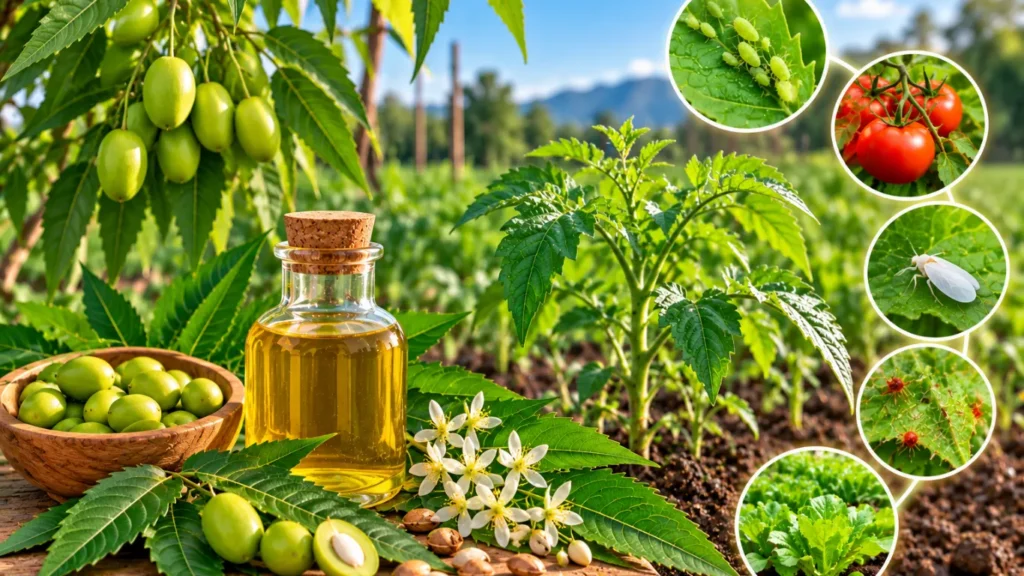
Neem oil is a widely used plant-care and agricultural input derived from the seeds of the neem tree. Farmers, gardeners, nurseries, and growers use neem-based products as part of plant-care and crop-management programs.
Neem oil contains naturally occurring compounds that are commonly used in agricultural and horticultural applications. Depending on the formulation and intended use, neem oil products may be used as part of integrated crop protection and plant-care practices.
Correct product selection, dilution, application timing, and coverage are important when using neem oil. Different crops and plants can have different requirements, so users should always follow the manufacturer’s product instructions.
In this guide, we will explain what neem oil is, its common uses, potential benefits, application methods, suitable crops, precautions, and frequently asked questions.
1. What Is Neem Oil for Plants?
Neem oil is a natural oil extracted from the seeds of the neem tree. Neem has a long history of use in traditional agriculture and plant care.
Commercial neem oil products are available in different formulations and concentrations. They may be used for gardening, horticulture, nurseries, and agricultural applications depending on the product label.
Neem oil is commonly used as part of an integrated plant-care program rather than as the only method of managing crop problems.
Common applications include:
- Vegetable crops
- Fruit plants
- Flowering plants
- Ornamental plants
- Nursery plants
- Horticultural crops
- Home gardens
- Agricultural crops
Before application, it is important to check whether the specific neem oil formulation is suitable for the intended crop and application method.
2. How Does Neem Oil Work?
Neem oil contains naturally occurring compounds, including azadirachtin in products where it is retained or specified. Different neem products can vary significantly in their composition and concentration.
Neem-based agricultural products may be used in integrated crop-management programs to help manage certain plant-care and pest-related issues.
The way a neem product works depends on:
- Product formulation
- Active or naturally occurring compounds
- Concentration
- Target pest or plant issue
- Application method
- Application timing
- Crop and environmental conditions
Because commercial neem products differ, growers should not assume that every neem oil product has the same composition or use instructions.
3. Benefits of Neem Oil for Plants
Neem oil is popular among growers because it can be incorporated into plant-care programs using a naturally derived agricultural input.
When used according to the product instructions, neem-based products may offer several advantages.
Common benefits include:
Plant-care support: Neem oil can be included in an integrated approach to plant and crop management.
Naturally derived input: Neem oil comes from neem seeds and is widely used in organic and natural plant-care practices.
Versatile application: Suitable products can be used for different plants and crops according to their labels.
Useful for horticulture: Neem-based products are commonly used in gardens, nurseries, and horticultural production.
Supports integrated crop management: Neem products can be combined with monitoring, sanitation, cultural practices, and other suitable crop-management techniques.
Suitable for different growing environments: Depending on the product, neem oil may be used in home gardens as well as commercial agricultural settings.
Neem oil should be used correctly and should not be considered a universal solution for every plant pest or disease.
4. Neem Oil Uses in Agriculture
Neem-based products can have several applications in agriculture and horticulture. Their exact use depends on the formulation and label directions.
Common uses may include:
- Plant-care programs
- Pest-management programs
- Horticultural crop management
- Nursery plant care
- Vegetable crop management
- Fruit plant care
- Ornamental plant care
- Integrated crop protection programs
Neem oil can be one component of an integrated approach that also includes crop monitoring, proper irrigation, field sanitation, biological controls, physical controls, and other appropriate agricultural practices.
Correct identification of the plant problem is important before selecting any treatment.
5. Neem Oil for Different Plants and Crops
Different crops can respond differently to neem oil applications. Therefore, growers should always check the product label and, where appropriate, test the product on a small area before wider application.
Vegetable Crops
Neem-based products may be used in vegetable crop-management programs when the specific product is approved for the crop. Application should follow the recommended dilution and timing.
Fruit Plants
Fruit crops can be included in neem-based plant-care programs where the product label permits their use. Application should take into account the crop stage and harvesting requirements.
Flowering Plants
Neem oil can be used on suitable ornamental and flowering plants according to the product instructions. Extra care should be taken with sensitive plants and flowers.
Nursery Plants
Nursery growers can use suitable neem-based products as part of plant-care programs. The concentration should be appropriate for young plants and follow the manufacturer’s instructions.
Home Garden Plants
Gardeners may use neem oil products for suitable plants, but correct dilution and application are essential to reduce the risk of plant damage.
6. How to Use Neem Oil Spray
Neem oil products can come in different concentrations, so there is no single dilution ratio that applies to every product.
Always follow the product label for the correct dilution and application method.
General application steps:
Step 1: Read the label
Check the recommended crop, dilution rate, application frequency, and safety instructions.
Step 2: Prepare the spray
Dilute the product according to the manufacturer’s instructions. Do not use a stronger concentration simply to obtain faster results.
Step 3: Test on a small area
For plants where sensitivity is uncertain, apply the prepared solution to a small section and observe the plant before treating a larger area.
Step 4: Apply evenly
When foliar application is recommended, spray the appropriate plant surfaces evenly while avoiding excessive application.
Step 5: Follow the recommended schedule
Repeat applications only according to the product label and crop-management recommendations.
Important:
Do not mix neem oil with other agricultural products unless the manufacturer confirms compatibility.
7. Best Time to Apply Neem Oil
Application timing can affect the suitability and performance of neem-based products.
For many foliar applications, growers should consider environmental conditions and avoid periods of extreme heat or direct intense sunlight if the product label advises against it.
Important factors include:
- Crop type
- Plant growth stage
- Weather conditions
- Temperature
- Sunlight intensity
- Product concentration
- Application method
- Manufacturer recommendations
Neem oil should generally be applied according to the specific product instructions rather than using a fixed schedule for every crop.
For crops intended for food production, growers should also follow all applicable label directions regarding pre-harvest intervals and permitted uses.
8. Important Precautions When Using Neem Oil
Although neem oil is naturally derived, it should still be handled and applied carefully.
Keep these points in mind:
- Always read the product label before use.
- Use only the recommended concentration.
- Do not apply more frequently than recommended.
- Test sensitive plants before wider application.
- Avoid unsuitable weather conditions.
- Follow crop-specific instructions.
- Keep the product away from children and pets.
- Store the product according to the manufacturer’s instructions.
- Do not mix with other products unless compatibility is confirmed.
- Follow applicable agricultural and local regulations.
Some plants may be sensitive to oil-based sprays. Therefore, proper dilution and testing can be important.
9. Frequently Asked Questions About Neem Oil for Plants
What is neem oil used for on plants?
Neem oil is commonly used as part of plant-care and integrated crop-management programs. Depending on the formulation, it may be used for certain pest-management applications.
Is neem oil good for plants?
A suitable neem oil product can be useful as part of an appropriate plant-care program when it is correctly diluted and applied according to the product label.
Can neem oil be used on vegetables?
Some neem products are labelled for use on vegetables. Always check the specific product label for approved crops, dosage, application method, and harvesting instructions.
Can neem oil be used on fruit plants?
Yes, suitable products may be used on certain fruit plants when permitted by the product label. Follow all crop-specific instructions and any applicable pre-harvest requirements.
How often should neem oil be applied?
There is no universal application schedule. Frequency depends on the product formulation, crop, target issue, environmental conditions, and manufacturer’s instructions.
Can neem oil be sprayed directly on leaves?
Some neem oil products are designed for foliar spraying. Use only the recommended dilution and follow the product’s application instructions.
Can neem oil replace all pest-control methods?
No. Neem oil should generally be considered one component of an integrated crop-management approach. Monitoring, sanitation, cultural practices, biological controls, and other appropriate methods may also be needed.
Can neem oil burn plants?
Improperly concentrated oil sprays or applications under unsuitable conditions can cause plant injury in sensitive plants. Always follow the product label and consider testing on a small area first.
Need Help Choosing the Right Neem-Based Product?
Choosing a suitable neem-based agricultural product depends on the crop, intended application, product formulation, concentration, and specific plant-management requirement.
Chayan Fertilizers provides agricultural input solutions for farmers, growers, nurseries, and agricultural businesses looking for suitable products for crop and plant management.
Before purchasing or applying neem oil, check the product composition, recommended dosage, crop suitability, application method, storage requirements, and label instructions.
Visit chayanfertilizers to explore agricultural products and learn more about available crop-management solutions.
For product information or guidance about your crop requirements, contact the Chayan Fertilizers provides agricultural products for different crop nutrition and plant-management requirements. Farmers and growers can explore suitable solutions based on their specific needs.
team.
Conclusion
Neem oil is a naturally derived agricultural input that can be incorporated into plant-care and integrated crop-management programs. Depending on the formulation, neem-based products may have applications in vegetable crops, fruit plants, nurseries, gardens, ornamental plants, and other agricultural settings.
Correct product selection, dilution, application timing, and crop-specific instructions are essential for responsible use.
Neem oil works best as part of a broader plant-management strategy that includes regular crop monitoring, good soil management, proper irrigation, sanitation, and other appropriate agricultural practices.
Chayan Fertilizers provides agricultural products for different crop nutrition and plant-management requirements. Farmers and growers can explore suitable solutions based on their specific needs.